July 24, 2026 · 6 min read
Police Scanner Encrypted? What It Means and What Still Works
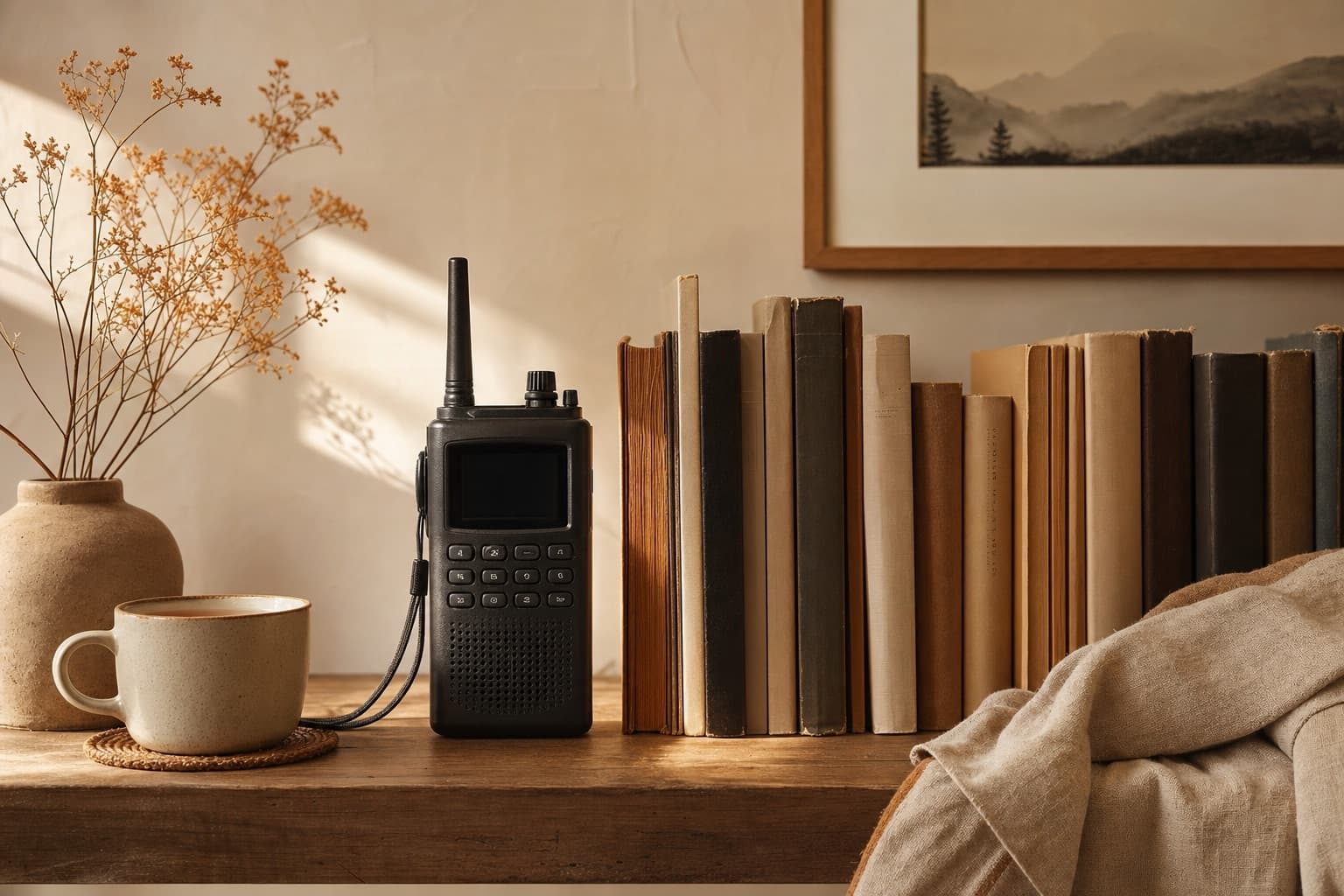
One day the feed just stopped. The scanner still powers on, the app still loads, but your town's police channel is silent or reduced to a short digital growl. Nothing is broken. In most cases, the department moved its dispatch to an encrypted digital system, and consumer scanners cannot follow it.
This guide explains what happened, why departments do it, what usually stays public, and what your options are now. It is written for two readers at once: the hobbyist who lost a feed, and the son or daughter who quietly used that feed to keep an ear on a parent's neighborhood.
Why your police scanner stopped working
Most US police departments have spent the last two decades moving from analog radio to digital trunked systems, often built on the P25 standard. Digital alone does not lock anyone out. Plenty of scanners handle digital traffic. Encryption is a separate switch. When a department turns it on, radio traffic is scrambled with a key that only authorized radios hold. Your scanner still receives the signal. It just cannot make sense of it.
Departments encrypt in different amounts. Some encrypt only tactical or investigative channels and leave routine dispatch open. Others encrypt everything, including the main dispatch channel most listeners followed. If your feed went completely quiet, the second scenario is the likely reason. The department's own announcements or local news coverage will usually confirm it.
Why departments say they encrypt
Two reasons come up in nearly every announcement.
- Officer safety. Anyone with a phone can stream dispatch in real time, and departments cite cases of suspects listening to police movements during pursuits and standoffs.
- Privacy of victims and witnesses. Dispatch traffic can include names, addresses, medical details, and mental health information about people on the worst day of their lives. Encryption keeps that off the open air.
There is also a policy current behind the trend. Federal rules on protecting criminal justice data have been read by some states and counties as a reason to encrypt dispatch broadly. Critics, including many journalists, argue that full encryption weakens public oversight, and some agencies have answered with delayed feeds or media access. How that debate lands varies town by town.
What usually stays in the clear
Police encryption often does not take everything with it. In many towns, some or all of the following remain publicly listenable:
- Fire dispatch. Fire departments encrypt far less often than police. Structure fires, alarms, crashes, gas leaks, and wires down are frequently still broadcast in the clear.
- EMS and ambulance dispatch. Often still open, though some regions route it through encrypted systems or move patient details to phones and computer terminals instead of the radio.
- Other traffic. Public works, aviation, rail, and marine channels are generally unencrypted where they exist.
This varies enormously by jurisdiction. Some counties encrypt police, fire, and EMS together. Others encrypt nothing at all. The only reliable answer is to check what is actually broadcast where you live, not what is typical nationally.
What it means for scanner apps and online feeds
Streaming scanner feeds on the popular listening platforms are run by volunteers who point a receiver at local frequencies and relay the audio. They have no special access. When a town encrypts its police dispatch, the police portion of those feeds goes silent at the same moment your own scanner does. Feed providers often keep the fire and EMS side running, which is why some feeds now carry engine responses and medical calls but no police traffic at all.
No app update fixes this, and no paid tier restores it. If an app claims to carry a town's encrypted police dispatch live, be skeptical. What it usually carries is whatever remained unencrypted.
The legality question, briefly
In the United States, listening to unencrypted public safety radio is legal. The hobby has existed about as long as radio has. A few states add narrow restrictions, such as limits on using a scanner in a vehicle or on using intercepted traffic to help commit a crime, so it is worth knowing your own state's rules.
Encryption does not change any of that, and it is not a signal that listeners were doing something wrong. The line the law draws is at decryption. Intentionally decrypting encrypted radio traffic you are not authorized to receive is prohibited under federal law. There is no legal decoder, key, or workaround, and anything sold as one should be treated as a scam.
How to stay locally aware after encryption
If the point of listening was awareness of a specific place, your own street or a parent's, there are still workable options.
- Find what is still broadcast. Where fire and EMS dispatch remain public, they cover a large share of what matters near a home: fires, medical calls, crashes, hazardous conditions.
- Sign up for official alerts. Most towns run an emergency notification system, and many departments post incidents on social media. These are selective and delayed, but they come straight from the source.
- Ask about delayed feeds. Some agencies that encrypt offer a delayed public stream, often minutes to a half hour behind, or grant access to local media. It does not exist everywhere, but asking costs nothing.
- Local news and community groups. Useful for context, though neighborhood social feeds mix real information with rumor.
One more option, mainly for the second kind of reader. Nearhold exists for people who were never scanner hobbyists but relied on that ambient awareness around the addresses that matter, often a parent's. It listens to whatever public dispatch audio exists near those addresses, which after police encryption is often fire and EMS, and emails you an alert when it hears a serious call nearby, plus a short nightly report. If nothing happened near them, the report says so. To be clear about the limits: Nearhold is not a way around encryption. If a channel is encrypted, nobody outside the department hears it, including us. Coverage depends entirely on what remains public in a given town, which is why signup starts with a ZIP check instead of a promise.
FAQ
Why can't I hear my police scanner anymore?
The most common reason is that your local police moved to an encrypted digital system. Your scanner still works and may still receive fire, EMS, and other unencrypted traffic. Check your department's website or local news for an encryption announcement, and rescan for channels that remain open.
Is it illegal to listen to a police scanner?
No. Listening to unencrypted public safety radio is legal in the US, whether on a scanner or a streaming app. Some states restrict scanner use in vehicles or in connection with a crime. What is illegal is decrypting encrypted traffic without authorization.
Can any scanner receive encrypted police channels?
No. Encryption requires a key held only by authorized radios, and no consumer scanner, app, or firmware can bypass it. Products that claim otherwise do not work and may be fraudulent. The realistic path is monitoring what remains unencrypted in your area.
The honest bottom line
Encryption took something real away from listeners, and no service can give the police channel back. What often remains is the public audio around a specific place, and that can still be worth hearing. If you want to know what is actually listenable near the addresses you care about, run the ZIP check on nearhold.com. It answers for that specific location, including when the honest answer is not much.
Someone you love lives far away?
Nearhold listens to public dispatch radio near the addresses you choose and alerts you when we hear serious calls close by. Check coverage with their ZIP code.
Check their ZIP code →Keep reading
Nearhold provides situational awareness from publicly available dispatch audio. Content is AI-generated from unconfirmed communications and is not an official report. Always verify with official sources. In an emergency, call 911.