July 24, 2026 · 6 min read
What Medical Alert Systems Miss for Seniors
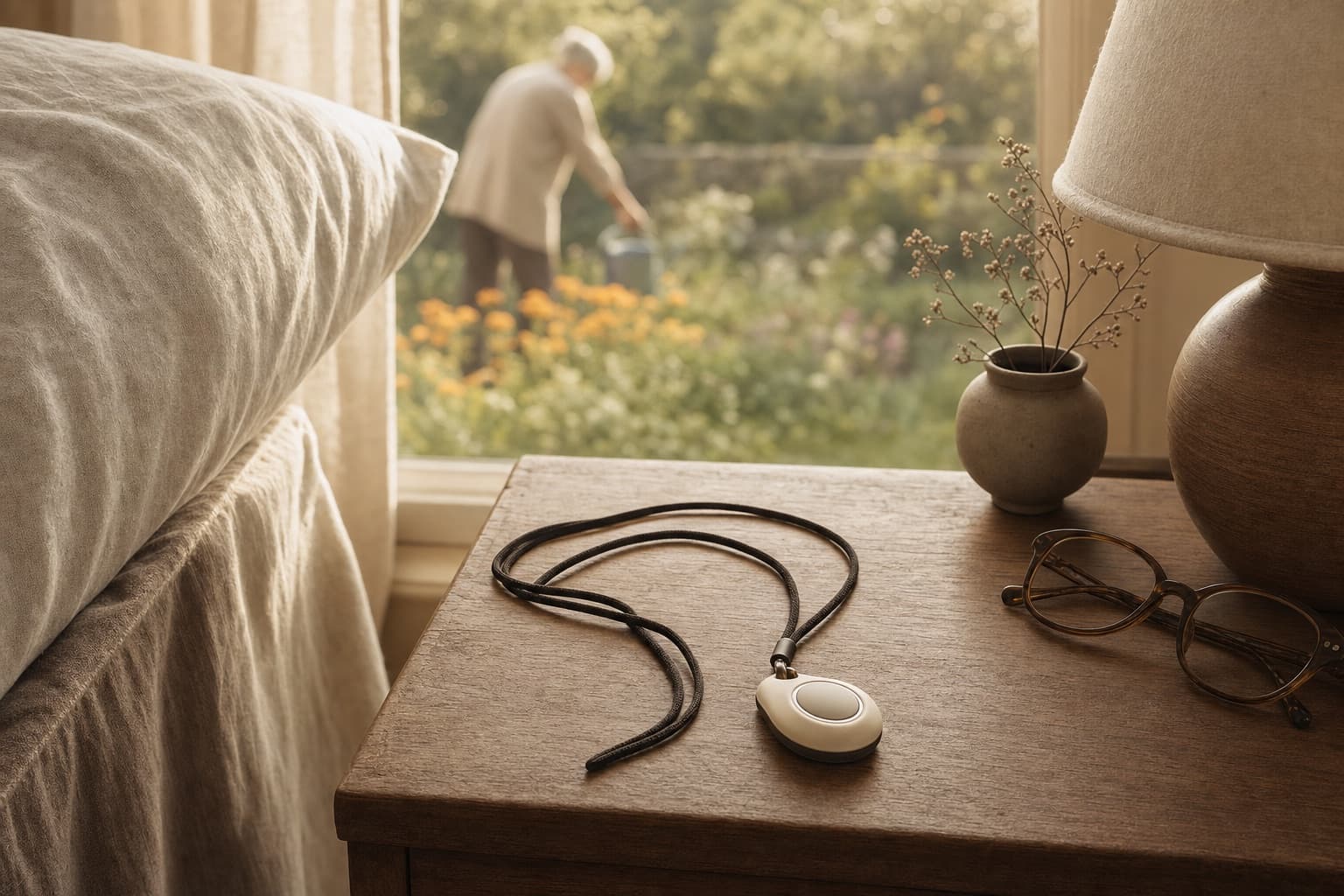
If you are researching medical alert systems for seniors, you are probably doing it for a parent who lives alone. You want straight answers to two questions. Do these systems actually work, and what happens in the situations they cannot cover. Here is both. The short version: medical alert systems are genuinely good at the job they are built for, and they also have real gaps that no vendor page will list. Knowing those gaps is how you build coverage that holds up.
What medical alert systems do well
The core product is simple and proven. Your parent wears a pendant or wristband. If they press the button, a monitoring center answers within seconds, speaks with them through the device or a base unit, and dispatches help if needed. The operator stays on the line until help arrives and can notify you as well.
That loop works. Monitoring centers are staffed around the clock. Operators follow trained protocols, know the address on file, and can tell responders about medical conditions your parent listed in advance. Many services also coordinate a lockbox code so EMS can get in without breaking a door.
Fall detection has real value too. A pendant with an accelerometer can place the call even if your parent cannot press the button, which matters in the worst cases, like a fall that leaves someone dazed or unconscious. Mobile units with GPS extend protection beyond the house for parents who still drive or walk daily.
If your parent wears the device and uses it, these systems do what they promise. That is not a small thing, and it is why they remain the standard recommendation.
Where they fall short
The gaps are rarely about bad hardware. They are about human behavior and system boundaries.
- The device only works if it is worn. Many seniors take the pendant off in the shower, where a large share of falls happen. Others leave it on the nightstand or quietly stop wearing it because they dislike what it signals. A pendant in a drawer protects no one.
- The button must be pressed. A stroke, a loss of consciousness, or a fall that pins an arm can make the button unreachable. Fall detection helps, but it misses some falls and cannot detect a medical event that involves no motion at all.
- False alarms wear people down. Fall sensors can trigger when someone sits down hard or drops the pendant. After a few embarrassing calls with an operator, some seniors turn the feature off or stop wearing the device entirely.
- Basic units stop at the front door. The standard home unit covers the house and yard. Errands, church, and visits to friends require a mobile unit, which costs more and needs charging.
- The family is often the last to know. If a neighbor sees your parent collapse and calls 911, the pendant never fires and the monitoring center never learns about it. Families in this situation often hear about an ambulance run hours later, from a neighbor or a hospital, and sometimes not at all. The pendant informs you only about events it initiated.
Questions to ask any vendor
Every provider will tell you about response times. Ask about the edges instead.
- What is your average answer time, measured by independent testing rather than marketing copy?
- How does fall detection handle false alarms, and can my parent cancel an accidental call easily without a lecture?
- Is the pendant waterproof enough to wear in the shower, and will you say that plainly in writing?
- What is the range from the base unit, in a real house with walls, not open air?
- Who monitors battery health, and how will I know if the device is dead or unplugged?
- What are the contract terms if my parent moves to assisted living or passes away?
- Will I be notified of every activation, including false alarms, and by what channel?
A good vendor answers these directly. Evasive answers on cancellation terms or false alarms are a signal worth trusting.
Build layers, not a single point of failure
The families who handle this well do not pick one product. They stack a few thin layers so no single failure leaves a blind spot.
- Layer one: the pendant. Keep it. It is the only layer that summons help directly, and the monitored response is worth the monthly fee if your parent will wear it.
- Layer two: a daily rhythm. A fixed morning call, a shared calendar, or a smart plug on the coffee maker that shows activity. Cheap, low tech, and it catches the quiet problems a pendant cannot.
- Layer three: nearby people. One neighbor with a key and your phone number covers more scenarios than most hardware.
- Layer four: awareness of emergency activity near the home. This is the gap where a neighbor calls 911 and you never hear about it.
That fourth layer is where our own product sits, so a plain disclosure is fair. Nearhold listens to public first responder dispatch radio near the addresses you choose and emails you an alert when it hears a serious call near that address, plus a nightly report. If nothing happened near your parent that day, the report says so. It costs $4.99 a month. It is not a medical alert service and it cannot summon help. Alerts are AI transcribed and unconfirmed, and in an emergency you should always call 911. It complements a pendant rather than replacing it: the pendant summons help, and Nearhold tells the family when help was summoned by anyone, including a neighbor or a passerby.
FAQ
Do medical alert systems work?
Yes, within their design. When a worn device is activated, monitored services reliably answer and dispatch help, and studies of monitored response consistently show faster help than waiting to be found. The failures cluster around the human side: devices not worn, buttons not pressed, and features disabled after false alarms. Judge a system by whether your specific parent will actually use it.
What are good medical alert alternatives if my parent refuses to wear one?
There is no single replacement for a monitored button, but layers help. Daily check-in calls, activity sensors, a smartwatch with fall detection they will actually wear, a trusted neighbor with a key, and an awareness service that tells you about emergency responses near the home. Most alternatives inform you rather than dispatch help, so pair them with a plan for who calls 911.
Will my family be told when 911 responds to my parent's home?
Not automatically. If the pendant initiated the call, the monitoring center will usually notify listed contacts. If anyone else called 911, no system in the standard setup tells you. Hospitals notify next of kin on their own timeline. This is the single most common surprise families report, and it is worth planning for directly.
The bottom line
A medical alert system is a good buy for a parent who will wear it. Buy it, test it monthly, and be honest about the gaps: it cannot act unworn, unpressed, or on events it never sees. Cover those gaps with routine, neighbors, and awareness. If you want that last layer, you can enter your parent's ZIP code at nearhold.com to see whether Nearhold can hear the public dispatch feeds for their area. If we cannot cover it, the checker says so.
Someone you love lives far away?
Nearhold listens to public dispatch radio near the addresses you choose and alerts you when we hear serious calls close by. Check coverage with their ZIP code.
Check their ZIP code →Keep reading
Nearhold provides situational awareness from publicly available dispatch audio. Content is AI-generated from unconfirmed communications and is not an official report. Always verify with official sources. In an emergency, call 911.