July 27, 2026 · 6 min read
How to Find Out If an Ambulance Was Called to an Address
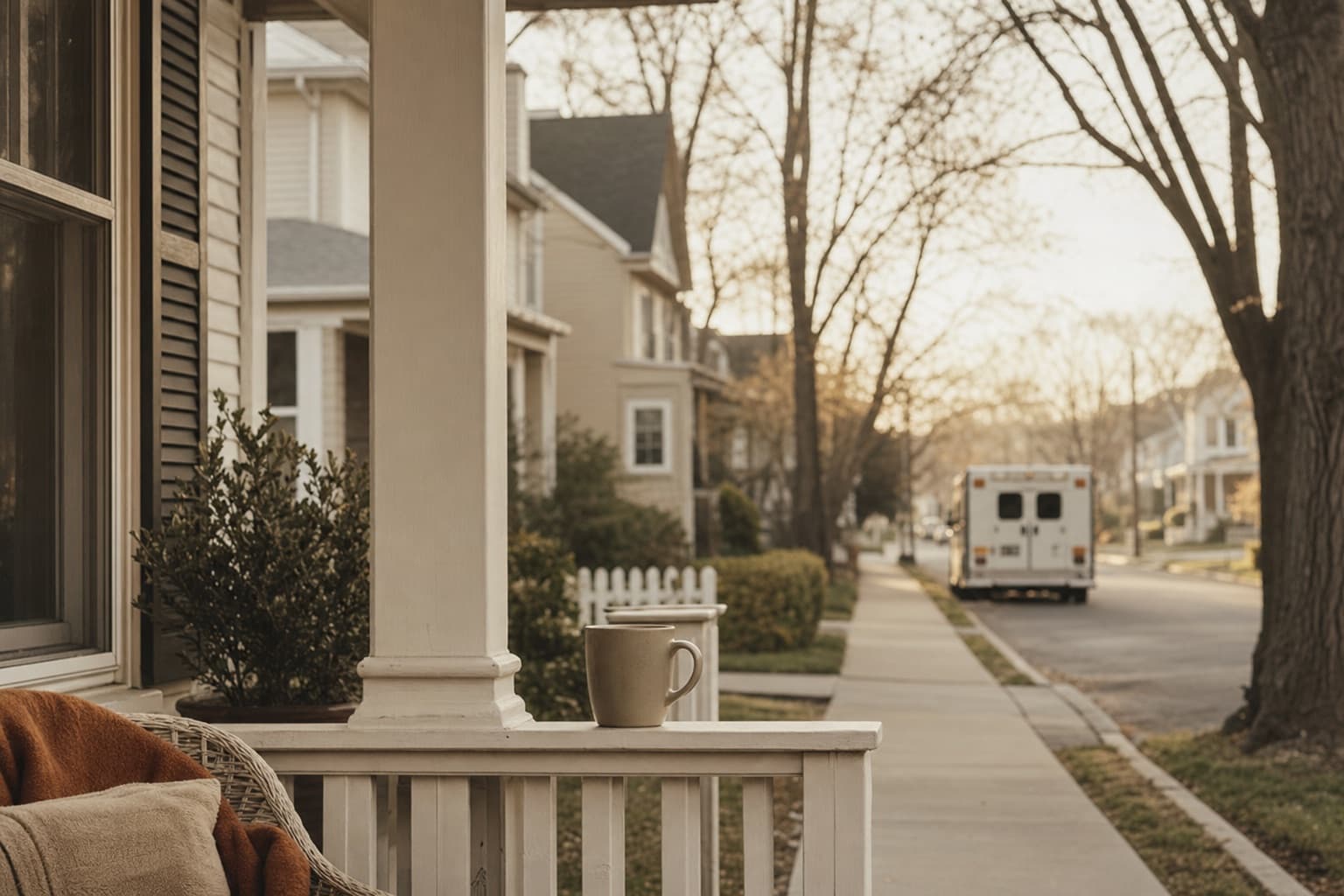
The ambulance came and went, and nobody called you. Maybe a neighbor mentioned it three days later. Maybe your mother brought it up herself, casually, as if a trip to the emergency room were a dentist appointment. If you are the adult child of an aging parent, especially one who lives alone, this is one of the most unsettling discoveries there is: something happened at the house, and you were not on anyone's list to call.
This guide covers what you can actually do. How to confirm an ambulance was called to an address, how to find out where it took someone, and why the system works this way in the first place.
Why families are usually the last to know
When paramedics respond to a call, their job is the patient. They assess, they treat, they transport. Notifying relatives is not part of the protocol unless the patient asks, and a person who is frightened, in pain, or confused often does not think to ask.
Dispatch centers do not keep family contact lists. Hospitals are careful with information for good reasons. There is no step anywhere in the chain where someone is required to pick up the phone and call a daughter two time zones away. So nobody does. It is not neglect. It is that no one owns the job.
How to find out after the fact
If you suspect an ambulance was at your parents' house, these are the legitimate routes, roughly in order of usefulness.
Call the non-emergency line
Every police or sheriff's department has a non-emergency number, and it is the right front door for this question. Ask whether emergency services responded to the address, and identify yourself as immediate family. Policies vary. Some agencies will confirm that a call occurred and describe its general nature. Others will only confirm that units responded, or will point you to a formal records request. Many EMS responses appear in the public dispatch log, so a polite, specific question, with the address and a rough time window, often gets a real answer.
Do not call 911 for this. That line is for emergencies only.
Call the hospital patient information desk
If you believe your parent was transported, call the most likely hospital and ask for patient information. Federal privacy rules are stricter than most people assume, but they are not a wall. If you ask for a patient by name, the hospital directory is generally allowed to confirm whether that person is there and share a one-word condition, unless the patient asked to be left out of the directory. Keep it simple: "I'm calling to find out whether my mother has been admitted," then give her full name.
If the first hospital says no, work outward. Ambulances usually go to the nearest appropriate emergency department, but a cardiac event or a stroke can mean a longer ride to a specialty center. Call the two or three closest hospitals before you assume anything.
Ask the neighbors
An ambulance in a driveway is hard to miss. A trusted neighbor with your cell number remains one of the most reliable notification systems ever invented. If you have not done this yet, do it on your next visit: introduce yourself to the people on either side of your parent's house, leave your number, and ask them to text you if they ever see emergency vehicles. Most people are honored to be asked.
Check the pendant company's contact list
If your parent wears a monitored medical alert pendant, the monitoring company keeps a list of people to call when the button is pressed. If you are not on it, ask to be added today. Then remember the limits. The pendant helps only if it is worn, charged, and actually pressed, and the company only knows about events that come through the button. A fall in the garden with the pendant on the nightstand never reaches their call center.
Why there is no official notify-the-family system
People are often surprised this gap exists at all. It exists because 911 was built to do one thing: move help toward an address, fast. Everything else was left out on purpose. Dispatchers have no idea who the patient's children are. Privacy law makes agencies cautious about volunteering medical details. And no level of government has ever been given the job of family notification for routine EMS calls. The most serious cases eventually bring a knock on the door or a call from a hospital social worker. The routine ones simply pass through, recorded nowhere a family would think to look.
The phone-line workaround, and its limits
There is one partial exception worth knowing about. Ooma, a VoIP home phone provider, offers a feature that can notify designated contacts when 911 is dialed from that phone. If your parent uses the service, turn the feature on. Just be clear about what it covers. It fires only when the call is placed from that specific phone. If a neighbor calls 911, if your parent dials from a cell phone, or if a passerby reports the emergency, no notification is sent, because the trigger lives in the phone, not in the emergency response.
Hearing it as it happens: dispatch radio
There is one place where an emergency response becomes audible in real time: public first-responder dispatch radio. When 911 sends an ambulance, a dispatcher announces the call over the radio so crews know where to go. In much of the country those channels are open to the public, and people have listened to them for decades.
That is the layer Nearhold works on. You give it the addresses that matter to you, usually starting with a parent's house. It listens to the public dispatch audio for that area around the clock, and when it hears what sounds like a serious call near that address, it emails you. You also get a short nightly report, so quiet days are confirmed instead of assumed.
Full honesty, because you should not trust a tool that oversells itself. Nearhold alerts are AI transcriptions of public radio traffic. They are unconfirmed. Addresses spoken over the radio can be partial or garbled, and no system catches everything. Nearhold is not a medical alert device and not an emergency service, and it never replaces calling 911. What it offers is ambient awareness: a real chance of knowing tonight, not Thursday, that something happened on your mother's street. It costs $4.99 a month and works alongside the pendant, the neighbor, and the Sunday phone call, not instead of them.
Frequently asked questions
How do I know if an ambulance was at my parents' house?
Ask your parent first, directly and kindly. Then call the non-emergency line for their town and ask whether emergency services responded to the address; many agencies will confirm that much. A neighbor who saw it can fill in the rest. Going forward, a dispatch-radio monitoring service can email you when it hears a serious call near the address.
Can I find out if 911 was called to a specific address?
Often yes, after the fact. Every 911 call generates a dispatch record, and many of those records are public. Start with the non-emergency line. If they cannot help, ask the agency's records department how to request the call log for that address and date. Expect confirmation that a response happened, not medical details.
Where did the ambulance take my mother?
Call the nearest emergency departments and ask for her by name at the patient information desk. Hospitals can generally confirm whether a named patient is there unless she opted out of the directory. If the likely hospitals all say no, call the non-emergency line, explain the situation, and ask which facility crews from her area typically transport to. Dispatch staff can often point a family in the right direction.
Start with a ZIP code
You cannot rewire how 911 works. You can add your own layer of awareness on top of it. Nearhold begins with one question: is there usable public dispatch audio near your parent's address? Enter the ZIP code at nearhold.com and you will have the answer in seconds. If coverage there is not good enough, we say so honestly, because an awareness tool you cannot trust is worse than none at all.
Someone you love lives far away?
Nearhold listens to public dispatch radio near the addresses you choose and alerts you when we hear serious calls close by. Check coverage with their ZIP code.
Check their ZIP code →Keep reading
Nearhold provides situational awareness from publicly available dispatch audio. Content is AI-generated from unconfirmed communications and is not an official report. Always verify with official sources. In an emergency, call 911.